

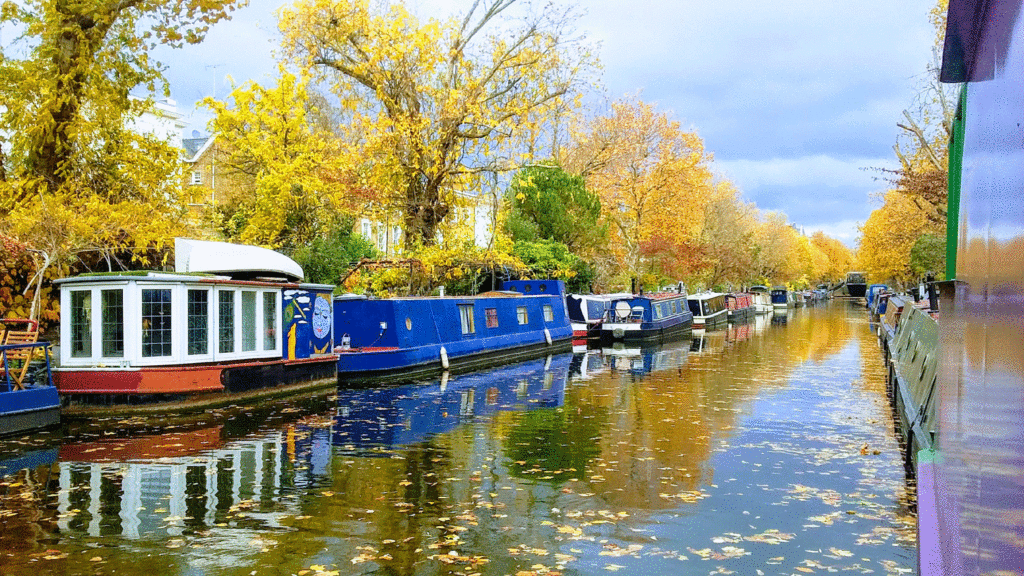
At the end of November 2016, I packed my bags and cast off from my London houseboat where I’d lived for the past 30 years. Instead of having a leaving party, I sent an email to friends and business associates, despite the fact that for some, this might have been too personal. I hoped that some of them might also be inspired to seek a fulfilling life beyond the everyday grind.
Early that same year, I’d returned from Croatia to London with the firm intention of finding a job by April. To my astonishment I realised that I no longer loved London, it “didn’t do it for me” any more. It was painful to watch the constant destruction of its soul. I wanted to leave, but at the same time, the pressure of needing more money intensified. A trivial episode with some garden compost started me thinking: “Why do I need more money, why should I work? To buy things that I don’t need and can live without – like garden compost!” I made a profound and lasting decision of not wanting to work any more! Soon I received an offer I couldn’t refuse – and rejected it. It turns out that my life change was brought about by a purchase (or not) of a bag of compost.
But what did I really want? Soon the answer came in the form of an email from Annie, asking me if I wanted to sail around the world with Alan. Although I knew little about him or his boat, nor had I planned to circumnavigate the globe, suddenly I knew that this is what I wanted to do. My life instantly took a different turn.
By chance I came across some verses that resonated within me. The first one was by poet W. B. Yeats
The Lake Isle of Innisfree
- I will arise and go now, and go to Innisfree,
- And a small cabin build there, of clay and wattles made:
- Nine bean-rows will I have there, a hive for the honey-bee;
- And live alone in the bee-loud glade.
- And I shall have some peace there, for peace comes dropping slow,
- Dropping from the veils of the morning to where the cricket sings;
- There midnight’s all a glimmer, and noon a purple glow,
- And evening full of the linnet’s wings.
- I will arise and go now, for always night and day
- I hear lake water lapping with low sounds by the shore;
- While I stand on the roadway, or on the pavements grey,
- I hear it in the deep heart’s core.
The second was the lyrics of one of Arctic Monkeys’ songs:
- This is how you are
- Or have to be
- In a decadent city
- At the time of greed.
I arranged to meet Alan, who was temporarily working in England, to firm up a plan: we would cruise in New Zealand for three to four months and if everything was OK on board, we would leave for Borneo and sail round the world. I could hardly wait for this to happen. I immediately started getting rid of most of my possessions. The most difficult was to part with 100 pairs of my shoes, many of which held precious memories: if I could give them to charity, I’d be free to leave. In some ways it was symbolic: my life on Terra Firma was over and for a new life at sea I wouldn’t need high heeled shoes! Disposing of things was cathartic and represented closing a chapter in my life and beginning a new life where there would be no room for many possessions. I moved on mentally and emotionally, feeling even physically much lighter. I was very happy to be left with only 130 kilograms of personal luggage (including a bicycle) which was transported to Croatia, to my parents’ home.
Ready to go and elated, I sent Alan a message and received an unexpected and brief answer: “Sorry, but I have to cancel everything.” What a shock! I was without money, work or suitable shoes and clothes. I had a one-way ticket to New Zealand and no entry visa. I felt desperate, wondering what to do, what exactly had happened and why. My dream was over.
A friend, seeing me so upset, suggested that I go back to work for a year. I angrily rejected the idea. I had made a difficult, life-changing decision, expending huge amounts of energy at all levels in order to make it happen. It seemed impossible that I could do all this again. I resolutely decided that I’d neither change nor question my decision, and would go to New Zealand, in spite of everything.
After this episode with Alan which shattered my dreams, I now devised my own Manifesto: “To deepen my own sense of existence by creating new friendships – I want to buy my own boat, convert it to junk rig, learn to sail, inspire other people to do it, write about it, and then sail on it, wherever the sea takes me.”
This was a long-held desire, which surfaced effortlessly in one breath that morning. I read it in wonder, immediately embracing it and determined to achieve it.
I emailed Annie and Alan asking for help. They both responded, contacting the NZ junkie community and within hours, five people had come back to me, willing to help with accommodation and/or sailing. I couldn’t believe what was going on. After two days on a roller coaster, I suddenly found myself in an even better position than before!
Excited about this development I now wanted to spend more time in New Zealand with these generous and hospitable people. I applied for an extended-stay visa, which I received very quickly. I was now on the moon, and realised I’d have plenty of time to fulfil the goals in my “Manifesto”. I tasked Annie to search for a boat for me and a few days later there was another fatal email with a link for the boat. She wrote: “You did ask!”
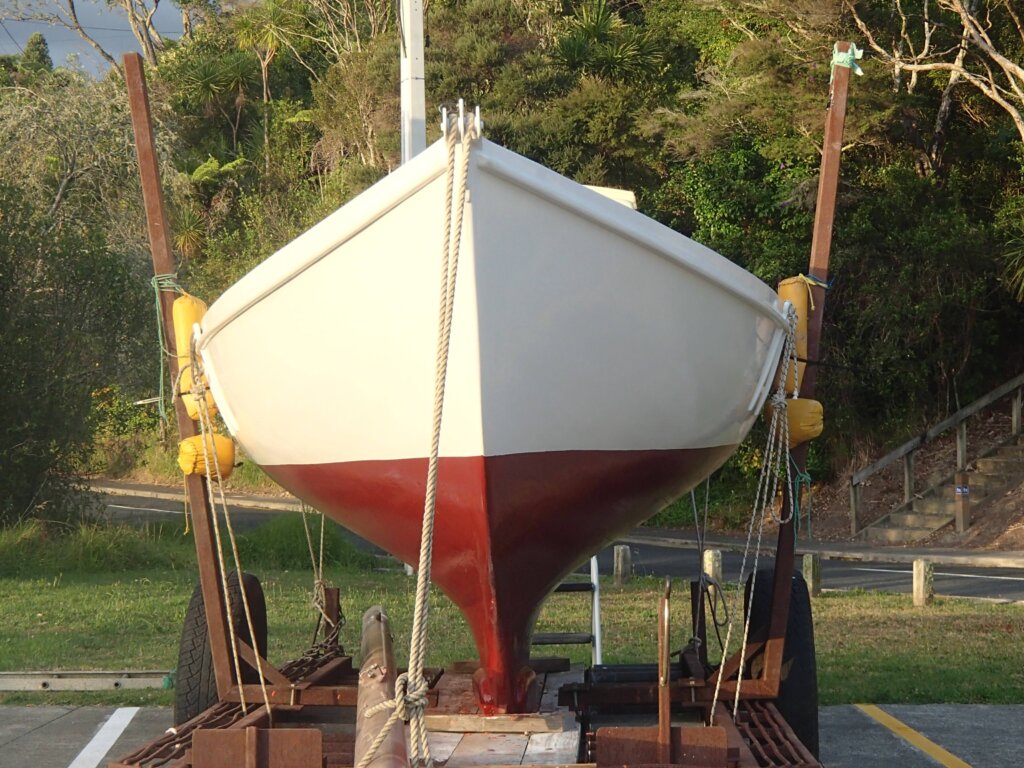
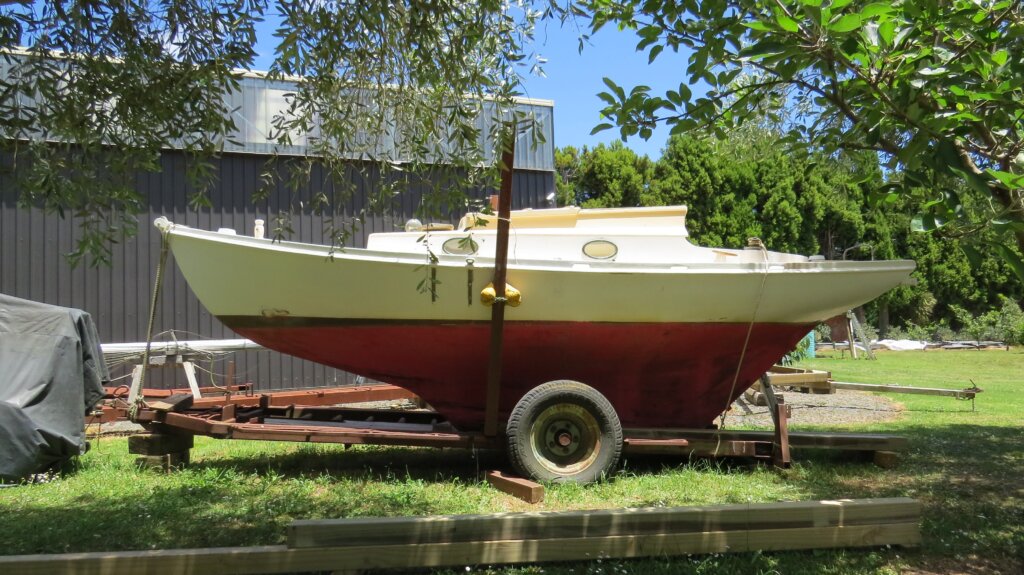
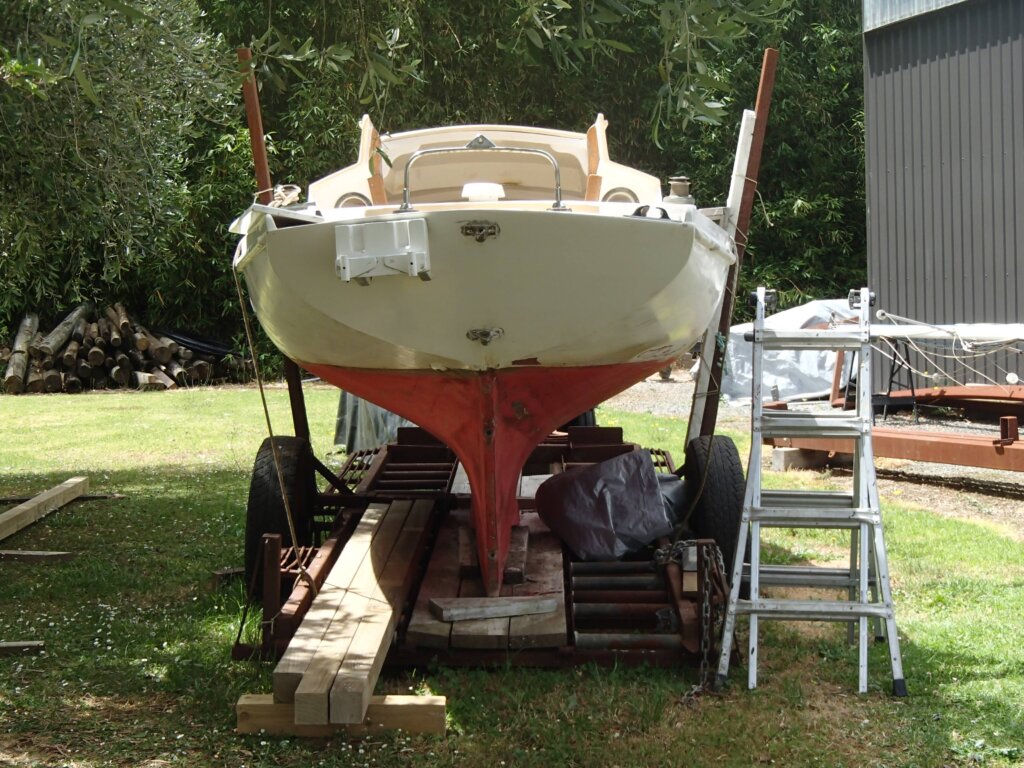
In disbelief I looked at the pictures of a tiny, sweet and gorgeous sailboat. I called the owner in NZ who had built her with his father, some 40 years ago. He’d owned her and been caring about her ever since. I told him I wanted to buy her and that he must keep her for me until I arrived. She was an irresistible beauty. A new adventure had started!
Soon I left London, my heart filled with happiness when I thought of the life I had spent there and the wonderful friends I was leaving behind, but I was also excited about the new life waiting for me in the southern hemisphere and in enchanting NZ.
When I arrived, I’d no fixed plans and was open to any opportunity. At first I stayed in the small, quiet village of Stillwater in the suburbs of Auckland, with my wonderful host and new friend Roger. Without him life would certainly have been much different and more difficult. His always present help was incredible: he is one of the nicest people I’ve ever met. He drove me to many beautiful places and I jokingly called myself “Miss Daisy” based on the film of that name. My little white room, which I named The Chapel, reflected not only the purity of the place where I lived but the process of purifying body and soul that I was experiencing. It was a completely new life, so different from London and I enjoyed it. The decision to pack everything and start from scratch began to bear fruit. New adventures arrived quickly and frequently. To celebrate my arrival, Roger had organised a welcome party. To my surprise more than 20 JRA members and friends turned up. I struggled to find anything suitable to wear in my mainly sailing gear wardrobe, but managed to buy a colourful outfit and a new pair of shoes – old habits die hard! It was wonderful to be able to talk and laugh with so many new friends. I even drank a glass of rum in the early hours of the morning!
That evening set the tone for my new sailing life in New Zealand and it was important to everything that followed. During the first month I went on numerous boats, met many extremely friendly and dear people, participated in several regattas and sailed over 1,000 miles – not always in the best weather!
As for the small, wooden sailing boat I bought while I was in London, it turned out to be a masterpiece of one of the greatest and most famous designers – the legendary L Francis Herreshoff – a Buzzards Bay 14. She is called Francis H. When I first saw her, hiding in a yard under an olive tree in Kerikeri I was even more convinced that our union was meant to be despite the great distance. Elated, I sat in her cockpit, happy to find her in such good condition.
Murray, who had built her in 1974, had invested a lot of effort into restoring his treasured boat. I spent a few wonderful days with him and his family, sanding her hull and painting her. Then she was finally transported to Stillwater and went back into the water.
When she floated I was overwhelmed with joy for although small trickles of water came through her seams, there was nowhere near as much as I’d been warned to expect. She was solidly and tightly built and within 12 hours she wasn’t making a drop. Her charming lines and the grace with which she floated delighted me as did the first glass of wine I drank, sitting on her deck and watching the sunset.
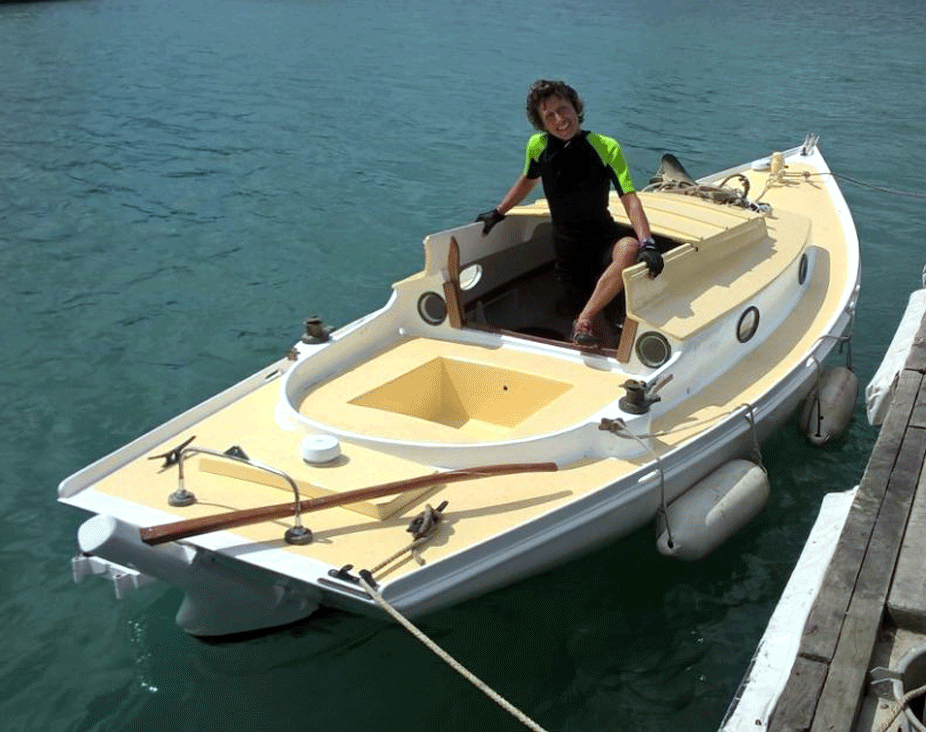
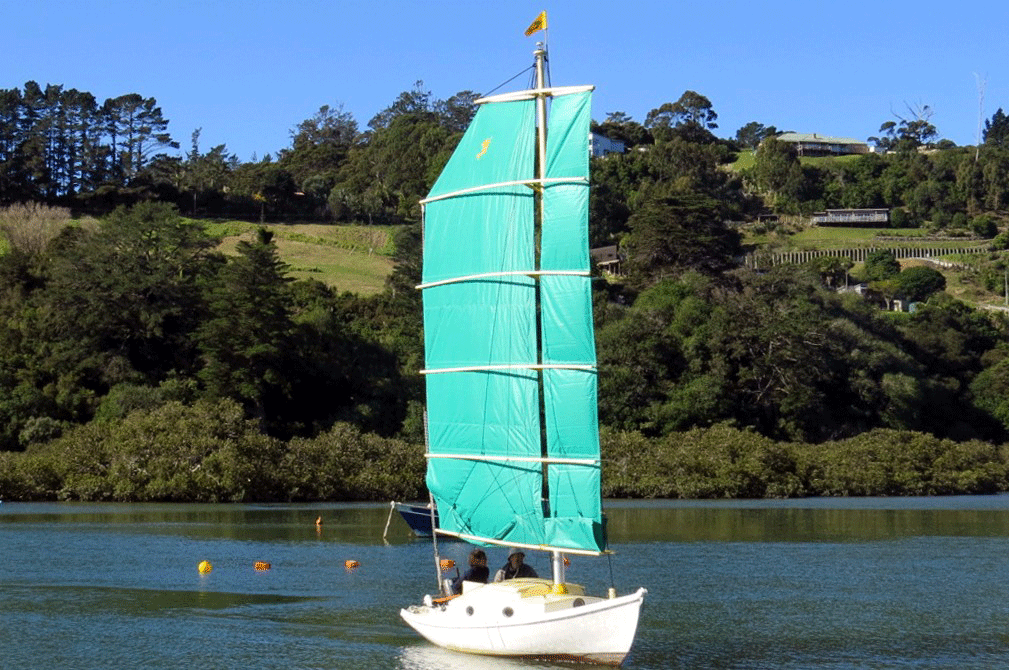
Many passers-by were overwhelmed by her beautiful lines, which made me very proud. Pete had offered to help me convert her to a junk rig and soon I ordered what was needed to build the mast and he pulled green sail material out of his secret repository, which was soon transformed into Francis’s sail. The second stage of my “Manifesto” was taking shape … but that was another story!